
Geo SEO for electricians: be the first call when the power goes out
Local SEO for electricians is the work that helps nearby customers find your business when they search for an electrician: in Google Maps, in the local results on Google Search, and in the AI answers that draw on the same information. A tripping switchboard doesn't wait for quotes. People search for an electrician near them and ring whoever Google shows first. [Geo SEO](/resources/local-seo-vs-geo-seo/) builds your case for that map pack in more suburbs, where the urgent calls are decided.
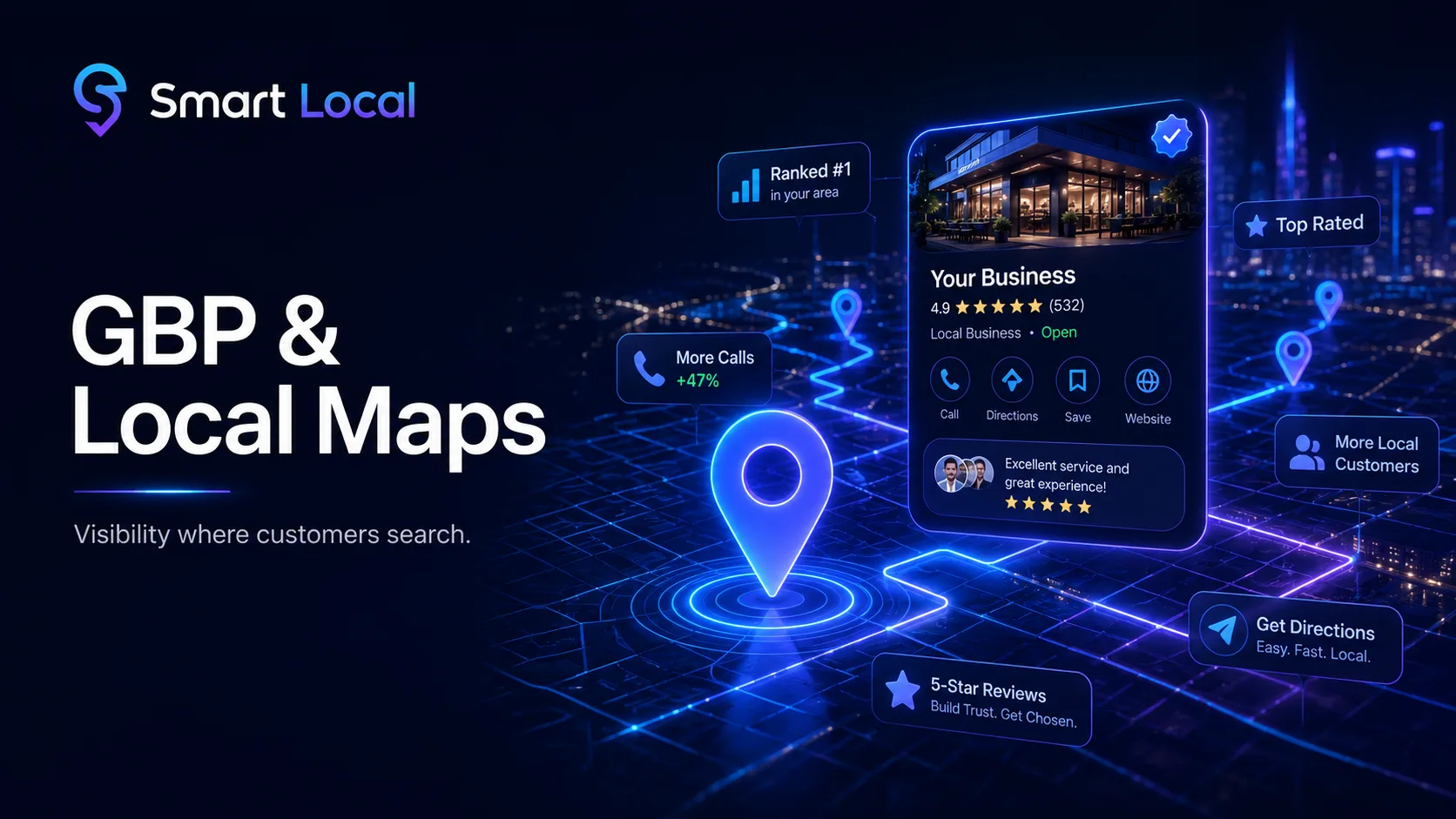

Why Geo SEO works for electricians
Electrical work splits into two kinds of searches. Urgent ones, like a dead switchboard or sparking power point, where people call the top map result on the spot. And planned ones, like rewiring or new lights, where they shortlist two or three local sparkies. Geo SEO goes after both, because both start with the map pack.
By default, Google keeps you visible in a tight circle around your address, even though you take jobs across half the coast. We push that circle outward suburb by suburb, through your Google Business Profile, suburb pages and GPS local signals from where you actually work.
Trust matters more for electricians than most trades, because the work is licensed and the risks are real. Reviews tied to real local jobs do double duty here. They lift your map rankings and they reassure the homeowner choosing who touches their wiring.
You see every target suburb in your reporting, and with no lock-in contracts we have to keep earning the work with results.
What's included
Electrical demand mapping
We find the suburbs near you where people are searching for electricians, from emergency callouts to switchboard upgrades, and check which map spots are winnable. Each suburb is sorted by how far it sits from your base, how many electricians already show there, and whether you actually want the work, so effort goes where a gain is realistic first.
Google Business Profile setup for electricians
Categories like electrician and emergency electrical service set correctly, with service areas that match where you take jobs. The work also covers the services list, true hours including any after-hours callouts, a description that names your licence, and job photos of switchboards, the van and finished installs.
Suburb landing pages
A page for each target area covering the electrical work locals there search for, written fresh for that suburb. Each one carries something only true of that area, such as the jobs you do there, photos from local work and reviews that name the suburb, so it never reads as a copy with the name swapped.
GPS local signals
Location signals from real job areas that build your relevance in each suburb you want to win.
Review momentum
A steady flow of reviews from completed jobs, which lifts rankings and settles the licensing and safety questions in a customer's head. Every customer gets the same direct review link at hand-off, every review gets a reply, and nobody is offered anything in return, which keeps the routine inside Google's review policy.
Licence and trust details
Your licence details placed where buyers and search engines can see them: the profile description, the footer of every page and each suburb page. Site markup uses the Electrician business type, and memberships such as NECA or Master Electricians Australia are shown only where you actually hold them.
Citations and consistency
Matching business details across directories, so Google trusts you in every area you target. That means the same name, phone and service details on Australian directories such as True Local, Yellow Pages and Hotfrog, plus any trade association member listing you're entitled to.

How the Maps radius really works for an electrician
Google's own help page on local ranking says local results are based mainly on three things: relevance, distance and prominence. Relevance is how well your profile matches the search. Distance is how far you are from the person searching. Prominence is how well known the business is, and Google says more reviews and positive ratings can help. The same page states there is no way to request or pay for a better local ranking.
Service areas are often misunderstood. Google Business Profile Help lets a service-area business list up to 20 service areas, and its guidelines say the overall area shouldn't extend more than about 2 hours of driving time from your base. Those areas tell customers where you work. Google's ranking explanation doesn't list them as a ranking factor, so adding Caloundra to your service areas doesn't on its own make you appear for searches there.
What stretches reach is the other two levers. Relevance grows when your profile, services and suburb pages clearly describe the electrical work people in that area search for. Prominence grows with reviews, consistent listings and pages that other local sites have reason to mention. Distance stays fixed, which is why a suburb right next to your base usually moves before one 40 minutes away, and why a map expansion plan goes outward in rings.
Competition decides how hard each ring is to win. The ABS counted 18,377 construction businesses in the Brisbane City Council area at June 2025, more than twice the 8,376 in the Sunshine Coast Council area. Construction is the ABS industry division that includes electrical services, and at the time of writing (November 2026) these are the latest counts by council area. A Brisbane electrician competes inside a much bigger field of trade businesses, and our page on Maps visibility across Brisbane covers how that plays out across the city's suburbs.
| Factor | What Google says | What changes it for a sparky |
|---|---|---|
| Relevance | How well a profile matches the search | Correct primary category, a full services list, suburb pages that describe real local jobs |
| Distance | How far the business is from the searcher | Nothing you can edit; it sets the order in which suburbs are worth targeting |
| Prominence | How well known the business is, including reviews and ratings | A steady review routine, consistent directory listings, local mentions and links |
| Service areas | Up to 20 areas, within about 2 hours' drive, address hidden for service-area businesses | Shows customers where you work; set them honestly and keep them current |

Which electrician searches each part of the work answers
Every electrician search lands on either your Business Profile or a page on your site, and each one needs a clear home. Mapping searches to assets before writing anything stops two of your own pages competing for the same job and shows which gaps to fill first. The phrases below are illustrative of how homeowners type, not volume figures; your own Search Console queries and the search terms in your Business Profile performance report show what people near you actually use.
Customer wording often differs from trade wording. A homeowner types "power keeps going off" far more naturally than "RCD nuisance tripping", so a suburb page or FAQ answer should use the homeowner's words and explain the trade term once.
| Search type | Illustrative searches | Asset that answers it | What it needs to win |
|---|---|---|---|
| Emergency, near me | "emergency electrician", "electrician near me" | Business Profile | Primary category Electrician, true hours, a working call button, recent reviews |
| Problem-led | "power point sparking", "safety switch keeps tripping" | Service page plus FAQ answers | A plain explanation of the fault, when it's unsafe, and a tap-to-call number |
| Planned job | "switchboard upgrade", "EV charger installation", "downlight replacement" | Service page | Job photos, scope, what affects the quote, licence details |
| Service plus suburb | "electrician Nambour", "switchboard upgrade Buderim" | Suburb page | Local job types, suburb reviews, links to the matching service pages |
| Landlord and property | "smoke alarm compliance electrician", "rental electrical inspection" | Service page with a property-manager section | What gets checked, the paperwork provided, how tenant access is arranged |
The profile and review routine, step by step
Most Maps gains for an electrician come from doing a short list of things properly and then keeping them up. The steps below are in the order the profile work is done. The two review steps never finish, because reviews take the longest to build.
- Audit the profileCheck verification, the business name, categories, hours, phone, website link and photos against Google's guidelines. The name must be your real-world business name with no suburbs or service keywords added, because Google's guidelines rule those out.
- Set categories with restraintGoogle's guidelines say to use as few categories as possible and to pick ones that complete the sentence "this business is a". Electrician goes first; a second category is added only where it describes the core business.
- Hide the address if customers don't visitA service-area business should hide its address, according to Google's guidelines, and a rented mailing address with no staff isn't eligible for a profile at all.
- Fill the services list and descriptionList each job type you want, from switchboard upgrades to smoke alarms, and name your licence in the description. Show your licence number and licensed business name on the profile and the website, and keep them identical in both places.
- Add real job photosSwitchboards, finished installs, the van and the team, taken on real jobs. Photos of someone else's work or stock images undermine the trust they're meant to build.
- Ask every customer for a review at hand-offSend Google's review link or show the QR code when the job is signed off, while the customer is still standing next to the new switchboard. Ask everyone, because Google's policy prohibits selectively soliciting positive reviews and offering any discount or gift in exchange for one.
- Reply to every reviewThank the customer, mention the job and suburb in plain words where it reads naturally, and handle complaints calmly with an offer to sort it out offline. Google says helpful replies can help a business stand out.

What an electrician suburb page needs: a hypothetical example
Google's spam policies describe doorway abuse as pages created to rank for similar searches that lead people to intermediate pages less useful than the destination, and they name pages built for specific regions or cities that funnel visitors to one place as an example. A suburb page that only swaps the town name is exactly that pattern. Our guide to when local landing pages deserve indexing sets out the test in full.
Say an electrician based in Beerwah wants more work in Caloundra. This example is hypothetical. A useful Caloundra page would open with the electrical work the business genuinely does there, such as switchboard upgrades in older homes, smoke alarm work for rental properties and ceiling fans in coastal units. It would show photos from jobs in the suburb, quote nothing it can't support, and include reviews only from Caloundra customers who wrote them.
The page would then answer a few questions locals ask, link to the matching service pages, and finish with the licence number, phone and a short quote form. If the business can't fill a page with real Caloundra detail yet, the better call is to wait until it has done enough local jobs to write one. Thin pages cost more than they gain.
- IncludeReal local job types, photos from the suburb, reviews that mention it, licence and contact details, links to the matching service pages
- Leave outInvented landmarks or statistics, another suburb's text with the name changed, reviews from elsewhere, claims of an office you don't have
How progress is measured honestly
Google's Search Central puts it plainly: no one can guarantee a #1 ranking on Google. So the useful measures for an electrician are the inputs within reach and the calls that follow, suburb by suburb, rather than promised positions. Each measure below has a known source and a known blind spot.
Read the numbers by suburb and by month, not week to week. Map positions shift with where the searcher stands, so a single check from your own phone at the workshop says little about Nambour. For a deeper walk through reading these figures, see our guide on call tracking and conversion reconciliation.
| Measure | Source | What it tells you | Watch out for |
|---|---|---|---|
| Map position by suburb | Rank checks run from points inside each target suburb | Whether you appear in the map pack where the searcher is | Results vary by exact location and device |
| Profile calls, directions and website clicks | Business Profile performance report | How often people acted on your profile | Only verified profiles show data, and taps are not booked jobs |
| Search terms | Business Profile performance report | The words people used to find you | Updated monthly, and Google says it can take up to 5 days to appear |
| Page queries and clicks | Search Console performance report | Which suburb and service pages are earning impressions and clicks | Low-volume suburbs show small, noisy numbers |
| Enquiries by suburb | Call tracking and form records | Which suburbs produce real jobs | Needs the suburb captured on every call and form |
Made for sparkies who cover real ground
An electrician based in Maroochydore takes urgent callouts in Nambour, Coolum and Sippy Downs without thinking twice. Google's default map radius doesn't reflect that, so those searches go to whoever else shows up.
Urgent electrical searches happen at the worst times, and the person searching only sees electricians Google trusts in their suburb. Each area we win for you is another stream of those calls, plus the planned work that follows.
Questions we get asked
Does this cover emergency and after-hours searches?
Yes, Geo SEO for electricians covers emergency and after-hours searches, because map pack visibility doesn't switch off at 5pm. If you offer after-hours callouts, we make sure your profile says so clearly for anyone searching at night. Categories like electrician and emergency electrical service are set correctly too, since people with a dead switchboard or sparking power point call the top map result on the spot.
Do I need a shopfront in each suburb?
No, an electrician doesn't need a shopfront in each suburb to show up there. Google ranks service businesses on relevance and trust rather than a street address in every area. We build real signals that show you genuinely work in each suburb, including service areas that match where you take jobs, suburb landing pages, GPS local signals from real job areas and matching business details across directories.
Where should an electrician show their licence number online?
An electrician should show their licence number on every page of the website and in the Google Business Profile description, written the same way in both. In Queensland, section 188 of the Electrical Safety Regulation 2026 says a contractor's advertisements must state the licensed or registered business name, that the holder is licensed under the Electrical Safety Act 2002, and the contractor licence number. Customers can check that number on WorkSafe Queensland's electrical licence holder search. A number that matches the public record backs up the trust your reviews build.
Which local SEO jobs can an electrician handle without an agency?
An electrician can handle the day-to-day local SEO jobs without an agency: keeping the Business Profile accurate, taking job photos, and asking for and replying to reviews. For website work, Google's SEO Starter Guide walks owners through common improvements to their own site and suggests hiring a professional when time is short. Suburb pages that pass the doorway test, consistent directory listings and per-suburb rank tracking take steady hours most electricians would rather spend on the tools. Our guide to doing your own SEO sets out the split.
How does local SEO work for an electrician in Brisbane?
Local SEO for an electrician in Brisbane works on the three factors Google names for local results: relevance, distance and prominence, as its local ranking help page explains. Distance is measured from the searcher, so an electrician based in Chermside can lead the map pack there and be missing in Carindale. How many Brisbane suburbs you target and how crowded each map pack already is set the scope, as our Geo SEO pricing page explains. Smart Local works from Glasshouse Mountains and serves Brisbane without an office there.
Do AI answers change how an electrician wins local searches?
AI answers don't remove the groundwork an electrician needs to win local searches. At the time of writing (November 2026), Google says AI Overviews and AI Mode have no additional technical requirements, standard SEO practices still apply, and Business Profile information should be up to date. The same profile, reviews and suburb pages that win Maps are what AI answers can draw on, though nobody controls whether one names you. See whether SEO still matters with AI search.
How is this different from your electrician marketing service?
Electrician marketing is the full toolkit, including ads and your website, while Geo SEO is one product that grows your Maps visibility suburb by suburb. It covers your Google Business Profile, suburb landing pages, GPS local signals, review momentum from completed jobs and matching business details across directories. It's a common starting point before adding the rest.
How long until new suburbs bring calls?
Nearby, quieter suburbs often start moving in the map pack within the first few months, while competitive suburbs take longer. Rankings come first because people with an urgent electrical problem call the top map result on the spot, and they only see electricians Google trusts in their suburb. Your reporting tracks rankings for every target area, so you can watch each new suburb build.
Keep exploring

Want the phones ringing?
Tell us your suburb and your trade. We'll show you which searches and suburbs we'd target first.