
Marketing for concreters, with the numbers to prove it
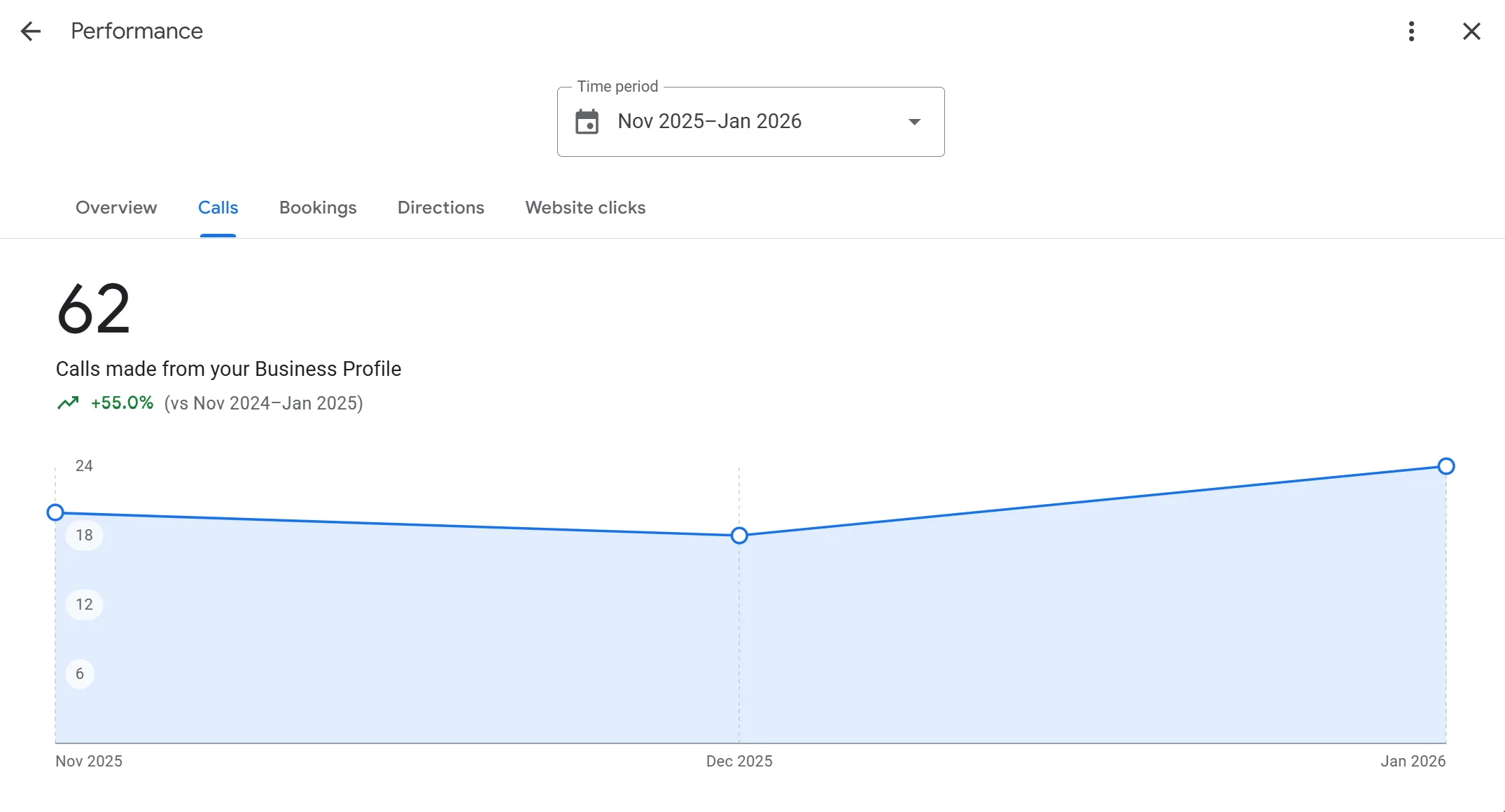
Burpengary Concreting's calls rose 55% in three months, while its organic searches and keywords climbed over six. That's the system we run for concreters: driveways, slabs, patios and pool surrounds. Good SEO for concreters starts with the pours you want more of, the suburbs your trucks can reach and the questions buyers ask before they'll let you near their front yard.


Why concreters work with us
Concreting is a big-ticket, compare-quotes trade. Before anyone rings, they've looked at your photos, your reviews and where you sit in the search results.
We've already shown what works for a concreter, in public. Burpengary Concreting runs on our website, our SEO and our Google profile work, and its rise in calls is published in our case studies.
The searches that pay are specific. Exposed aggregate driveways. Shed slabs. Pool surrounds. Patio extensions. We build a page for each, aimed at the suburbs you pour in.
No lock-in contracts. The reporting that shows Burpengary's growth is the same reporting you'd get.
Concrete is also hard to undo. A badly drained or cracked driveway sits in front of the house for decades, so careful buyers look for proof of base work and finish before they look hard at price. Your pages and profile should answer those questions first: what goes under the slab, how the finish was chosen, and which nearby jobs show it.
What we run for concreters
Job-type pages
Driveways, slabs, patios, pool surrounds and decorative finishes each get a page matched to how people search for that pour. Each page carries real jobs of that type, the finish options with photos, what the price depends on (without quoting figures) and the questions you hear on site. One genuine page per job type beats a stack of near-copies, which Google's spam policies treat as doorway abuse.
Local SEO for your pour radius
Concrete trucks have a practical range. We focus your rankings on the suburbs you can actually service at a profit. Google's Business Profile guidelines ask service-area businesses to hide their address and set a service area, so the profile, the suburb pages and the quote form all describe the same patch. Suburb-level Maps work is planned with [Geo SEO for concreters](/geo-seo/concrete/).
Google Business Profile management
Photos of fresh pours and finished driveways, review replies and service updates that help your profile compete in the Maps pack. Google's guidelines ask for the fewest categories that describe the core business, so the primary category matches your main work and the rest goes into services. Google's photo guidance asks for in-focus, well-lit shots that represent reality, which suits a finished exposed aggregate driveway far better than a filtered one.
Review collection
A simple follow-up that asks every customer for the reviews quote-shoppers read before calling. Google's review policy prohibits incentives and selectively asking only happy customers, and the ACCC says businesses must not create fake reviews or suppress genuine negative ones. So the ask goes out the same way after every job, and each review gets a reply.
Project records from every pour
Every job is a chance to add proof. The routine is short: photos of the site before, the formwork and reinforcement, and the finished surface, plus a few lines on the suburb, the job type and anything unusual about the site. Google's image guidance asks for images placed near relevant text, with short, descriptive file names and alt text, so each record sits on the job-type page it proves.
AI search visibility
We run AI SEO for every concreter we take on, structuring each business's details so AI tools can read them. Google says AI Overviews and AI Mode need no special optimisation beyond being indexed and eligible for a snippet, and it asks that structured data match the visible page and that Business Profile details stay current. Whether any AI product names your business is its call.
Live reporting
Searches, rankings, calls and quote requests in one dashboard, so you see exactly what the marketing is doing. Enquiries are tagged by job type and suburb, so you can see whether driveway pages bring driveway jobs. Google Ads can count calls from ads and calls to the number on your site, and jobs won later can be uploaded as offline conversions.

How a homeowner picks a concreter
Most residential jobs follow the same path from search to signed quote. Knowing the steps tells you which page, photo or profile detail to fix first, because each step is a point where a buyer can drop you and move to the next listing.
Google's Business Profile Help says local results are based mainly on relevance, distance and prominence, and that there's no way to pay for a better local ranking. So the first step depends on the profile and the matching job page both existing. Every step after that depends on what the buyer finds when they click.
- The first searchA job and a place: "concrete driveway Buderim", "shed slab near me". The buyer scans the Maps results and a few websites, usually on a phone.
- The photo checkThey look for a finish like the one they want. If your site only shows plain slabs, someone after exposed aggregate has nothing to judge you by.
- The review readRecent reviews get read closely, especially ones that name the job type, the clean-up and whether the crew turned up when they said.
- The quote roundTwo or three concreters get asked to quote. A quick reply, a proper measure-up and a clear note on base preparation give the buyer something to compare beyond the bottom line.
- The final checkBefore signing, many buyers search the business name again. Licence details, recent jobs and your replies to reviews get one last look. If you hold a QBCC licence, the QBCC's advertising rules require your licensed name and licence number on ads, including your website and social media, and a trading name alone doesn't meet the rule.
What each concrete job page has to answer
Each job type has its own buyer worries, and the page for it should answer them before the phone call. The table below is the starting map. The questions come from the job itself; your own enquiries and Search Console data refine the wording once the pages are live.
Supporting guides feed these pages. Exposed aggregate versus stamped versus plain, what changes the cost of a driveway, and how to get a site ready for a pour all answer early research questions, and each guide links to the job page it supports so the reader has one obvious next step.
| Job type | What the buyer is weighing | What the page should show |
|---|---|---|
| Driveways, new or replacement | Removing the old surface, truck access, drainage away from the house, finish choice | Before and after photos, how removal and falls are handled, finish options side by side |
| Shed, granny flat and house slabs | What the slab is for, site preparation, working to the engineer's plan | Slab jobs grouped by use, photos of formwork and reinforcement before the pour |
| Patios and paths | How it meets the house, levels, colour and finish | Jobs showing the join to the house, step-downs and drainage details |
| Pool surrounds | A finish that suits wet feet, matching the coping, timing with the pool builder | Finish choices for wet areas, how you work around the pool build |
| Decorative finishes | The look, upkeep and resealing | Close-up photos of each finish and plain notes on upkeep |
| Builder and commercial work | Capacity, scheduling and site paperwork | A separate page (see the next section) |

Builder and commercial enquiries need their own page
A builder or site manager hiring a concreter is checking different things from a homeowner. They want to know you can meet a pour date, handle the size of the job and arrive with the paperwork their site needs. Homeowner copy about kerb appeal tells them nothing, so this work gets its own page and its own enquiry path.
Commercial work also arrives through different channels. Much of it comes from relationships and repeat builders, so the page's job is to back up a referral when someone checks you, and to catch builders searching for a concreter in a new area. Marketing for builders explains how builders themselves look for trades and clients.
| Homeowner jobs | Builder and commercial jobs | |
|---|---|---|
| Who decides | One household, often comparing two or three quotes | A builder, site manager or owner's representative |
| How they find you | Maps results, job-type searches, a neighbour's referral | Repeat work, builder referrals, searches for a concreter in a new area |
| What they check | Photos of similar finishes, recent reviews, licence details | Capacity, crew size, scheduling, licence and insurance details, past projects of a similar scale |
| What the page needs | Job-type pages with finishes and suburbs | A commercial page with project types, capacity and a direct contact |
| What a good enquiry includes | Suburb, job type, rough size, site photos | Project address, pour volumes or plans, program dates |
Sorting enquiries before the site visit
Every measure-up costs you a drive and an hour. A quote form that asks the right questions sorts out the jobs worth visiting from small repairs, material shoppers and addresses outside your range, before anyone gets in the ute.
The form asks for:
- SuburbSo out-of-range addresses get a quick, polite no or a referral, instead of a wasted trip.
- Job typeDriveway, slab, patio, pool surround, path, repair or other, matching the service pages.
- Rough sizeSquare metres or a simple description, so tiny jobs can be priced or declined by phone.
- What's there nowBare ground, grass, pavers or old concrete to remove, which changes the work involved.
- TimingSo you can see which jobs fit the pour schedule and which are months away.
- Site photosOptional uploads that show access, slope and the existing surface before you drive out.

How an engagement runs, with a worked example
An engagement usually starts with a map of your market: the suburbs your trucks can reach, the job types you want more of, and who already shows up for those searches. Then comes an audit of your site and Business Profile, then the job-type pages, then the profile, review and project-record routines, and ongoing reporting. Our guide to what an SEO audit should deliver explains what that first audit should hand you.
Here's a clearly hypothetical example. Say a two-truck concreter in Caboolture wants more exposed aggregate driveways and fewer small path repairs. The plan would put the driveway page first, with local driveway jobs, finish photos and a form that asks for size and what's there now. Path repairs stay listed but lower on the page. The test is whether driveway enquiries from the target suburbs rise as a share of all enquiries, measured from the tagged enquiries rather than a raw call count.
Honest measurement needs patience. Google's SEO Starter Guide says some changes take effect in a few hours and others can take several months, and suggests waiting a few weeks before judging whether a change helped. Google also says no one can guarantee a #1 ranking on Google, so any plan that promises one is selling something Google itself rules out. Our guide to how long local SEO takes covers the timing in more detail.
Where concreting work comes from
Concrete searches name the job and the place. "Exposed aggregate driveway Maroochydore". "Shed slab Caboolture". Ranking for those pairings is what fills a pour schedule, so that's where we aim your pages.
Growth corridors matter for concreters. New builds, granny flats and shed approvals all need slabs, and the businesses ranked in those suburbs catch the work as it appears.
Repeat and referral work still flows through search. Even a recommended concreter gets googled before the call, so your profile and reviews close jobs your past work started.
Directory sites also turn up in Australian results for concreting searches. A directory profile can sit beside your own site and Business Profile, as long as the business name, phone number and service area match everywhere. Our guide to business listing accuracy shows how to check those details across listings.

Our work
Burpengary Concreting runs on a site we built: driveways, patios, slabs and pool surrounds.
Questions we get asked
I mostly do driveways. Does that change the plan?
Mostly doing driveways sharpens the plan for your concreting business. Driveway searches are high volume and suburb-specific, so we weight your pages toward driveway terms and finishes like exposed aggregate, then add slabs and patios as capacity allows. Those searches name the job and the place, such as "exposed aggregate driveway Maroochydore", and we aim your pages at the suburbs you can actually service at a profit.
How fast can a concreter see movement?
It depends on how established your Google profile and pages already are and how many concreters compete in your suburbs, so we set expectations from your area's data, then you watch it live. Google's SEO Starter Guide says some changes show within hours and others take several months. The rise in calls Burpengary Concreting saw over three months is one client's past record.
Can I do SEO myself?
Yes, a lot of it. Google says small business owners can do much of the work themselves and points them to its SEO Starter Guide. For a concreter, the owner jobs are the ones only you can do: photographing every pour, asking every customer for a review and keeping your Business Profile details right. Agency help makes sense for the site build, job-type pages, tracking and reporting when you're short on time.
Can ChatGPT do SEO?
ChatGPT can help with parts of it, such as drafting a page outline or a list of questions buyers ask. It can't photograph your jobs, collect your reviews or check whether a page is indexed. Anything it writes about your finishes, licence or service area needs checking against what you actually do, because a confident wrong detail on a job page costs trust with the buyer reading it.
Is SEO replaced by AI?
No. Google says there are no extra requirements or special optimisations needed to appear in AI Overviews or AI Mode, and that pages must be indexed and eligible for a snippet in normal Search. So the same groundwork carries over: clear job pages, an accurate Business Profile and structured data that matches the page. Whether an AI answer names your business is up to that product.
How much does it cost to pay someone for SEO?
It depends on the work involved, so we don't publish a figure. The main drivers are how many job-type pages you need, how many suburbs you want to cover, the state of your current site and profile, and whether Google Ads runs alongside. A strategy review maps those first. When comparing offers, our guide to comparing marketing proposals lists what each one should spell out.
Should I run Google Ads as well, and what happens if I stop paying?
Ads can bring enquiries while pages are still building, and they stop when the budget stops. Search rankings don't switch off the same way, but they aren't permanent either, because competitors keep publishing and Google keeps updating. Google's search terms report shows which searches triggered your ads, and terms that don't fit, like DIY or concrete supply, can be added as negative keywords.
How should a concreter handle wet weather and slow months?
Plan around them rather than judging the marketing by one wet month. Rain pushes pours back, so a full enquiry list can sit beside a quiet schedule. Compare each month with the same month last year, keep adding project records during quiet weeks, and use slower periods to fix pages and collect reviews. Our guide to local SEO seasonality covers how to read those swings.
Keep exploring

Want the phones ringing?
Tell us your suburb and your trade. We'll show you which searches and suburbs we'd target first.